

Life Issues – Clouds
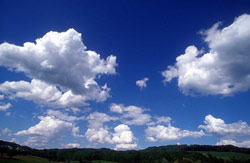
As small children we must have all spent some time gazing up into the sky, imagining images of dragons and castles and creatures without names. Clouds were wonders that could never be reached, except perhaps from heaven. And if the heavens were those dowdy cushions, we would then be able to bounce from cloud to cloud, to contort and shape these fluffy masses and wile away endless hours within our feathery hammocks.
For the more thoughtful moments of our childhood years, the clouds indeed held the possibility of a place more spiritual. How could we not consider a sight so beautiful, an image so perfect, a place more mysterious as the cloud mass above forming heaven itself?
Throughout the history of Christianity our direction for prayer has always been up. Our point of reference for a place of utopian beauty has been the sky and beyond.
For those seeking another form of belief the clouds represent the moods of Mother Nature herself.
Now for a small lesson in Cloud science.
In the year 1803, a rather clever English chap had a few things to say about the clouds above. The individual in question was a pharmacist and amateur meteorologist named Luke Howard.
Mr Howard (or Cloudy Luke as his friends would call him) identified ten categories of cloud. He claimed (correctly of course) that all 10 variations stemmed from three basic cloud forms. And here they are…..
Puffy Cumulus Clouds,
Layered Stratus Clouds
Feathery Cirrus Clouds.
Mr Howard discovered that clouds form when moist air is lifted high enough from the ground to cool and condense. When the sun heats the earth’s surface unevenly this creates a Cumulus cloud. Warm air bubbles then form and merge with thermals that drift upwards through the cooler air. Of course as the air cools down, so do the bubbles and as they travel higher they form a vapour, which condenses to create a cloud. Voila!!!
Cloud Pecking Order
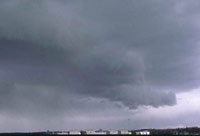
If you want to know who is the big cheese in the cloud family here is this weeks top 10 cloud chart. Which cloud family member is on top of the world and which of its fluffy relatives are down to earth.
No10 – Nimbostratus
Closest cloud to the earth’s surface. When little Nimbostratus is about, things get a little moist to say the least.
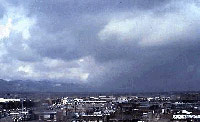
No 9 – Stratus
Riding just above little brother Nimbostratus, big brother Stratus is somewhat of a dull fella. Still hanging about as low as possible, he often produces light drizzle, but lacks in the serious rain department.
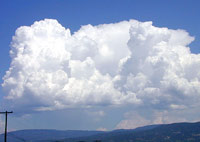
No 8 – Cumulonimbus
Not quite grasping the concept of respect for his elders, Cumulonimbus reigns supreme over big brother Cumulus. Cumulonimbus usually brings rain showers and can be known to have a somewhat explosive personality, often unleashing sudden rainstorms and somewhat dramatic thunderstorms. A little anger management would not go a miss with this Cloud family member.
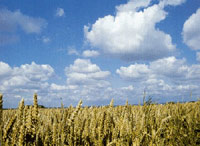
No 7 – Cumulus
Despite little brother Cumulonimbus taunting and lack of respect towards big brother, Cumulus offers it’s viewers a sight to please the eyes. Cumulus is a wonder to see and is easily identifiable in its sheer mass and towering splendour. The Cumulus cloud has a dense white head that is often described as resembling a cauliflower. Not a very attractive description if you are not a cloud, but the nicest compliment if you are.
Cumulus offers nothing but awesome beauty. However if Cumulus gets too big for his boots he has been known to become a rain-bearing Cumulonimbus which as we know is not such a pretty sight.
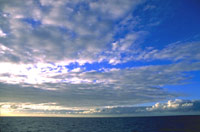
No 6 – Stratocumulus
Often described as blanket clouds, Stratocumulus forms itself from the head of little brother Cumulus. A bit of a hanger-on-er Stratocumulus grasps the top end of its Cumulus sibling and spreads itself into broad sheets. Like a badly made bed the blankets are spread across the sky, with little breaks to allow glimpses of the great beyond.
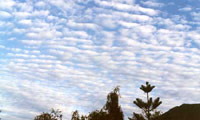
No 5 – Altocumulus
A little artistic in style, these puffy, rolling clouds really are splendid to look at. The Altocumulus has a clearly defined style, giving this formation a slightly overlapping look with dark, shadowed sides. The Versace of clouds.
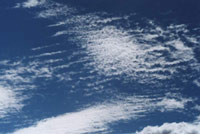
No 4 – Altostratus
Lacking somewhat in personality, Altostratus is a high climber and thinks big. This cloud can often completely cover the entire sky, giving the impression that you are looking through steamed up specs or you need a good nights sleep.
Altostratus can usually be located around warm fronts. After warm and moist air from the tropics slides up over a wedge of cold, polar air, its underling Nimbostratus will often oust Altostratus. (What is it with these younger brothers?)
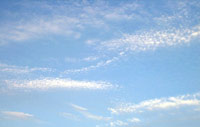
No 3 – Cirrocumulus
What a stunner of a cloud formation. All the Cirrus Cloud family consist of ice crystals. Cirrocumulus are real handsome little fellas. Often size challenged, these tiny clumps of shadowless clouds form a wave style effect. Given the name Mackerel Sky (or fish face to close friends), these clouds do resemble the mottled scales of a Mackerel. So with waves and fish, there really is a water feature and yet they shed no rain. Weird?
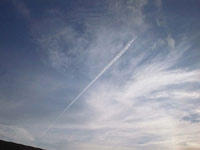
No 2 – Cirrostratus
Well the Cirrostratus cloud sure is high up in the cloud family and really does come a close second place to the king of clouds. Cirrostratus comes about when the highest of brothers spreads himself into thin sheets that look a little like spilt milk. The effect that these clouds provide can often be described as heavenly. The sun may appear extra dazzling, revealing coloured rings or haloes around its edges. Beautiful.
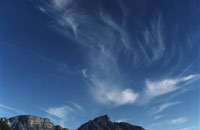
No 1 – Cirrus
The Crème de la Crème a la Cloud. Well it sure is cold up there, but this does not put a dampener on the glory of being king Cloud. Cirrus Clouds sit high up in the troposphere and due to the fact that it’s cold enough up there to give a snowman chilblains these clouds are made entirely from ice crystals. The Cirrus cloud is identifiable by its brush stroke effect and its impressive collection of trophies. Well-done Cirrus, what a cloud!
So there you have it. With all this wonderful information being made available by our Weather orientated buddy Luke Howard, meteorologists are still using the findings of Mr Howard today.
The Clouds will always remain a natural wonder of our beautiful planet and no doubt all future generations to come will play imaginary cloud games and look up to the mighty Cumulus in hope of seeing heaven itself.
Join us soon for another Life Issues.