

Life Issues – Life of a Convict
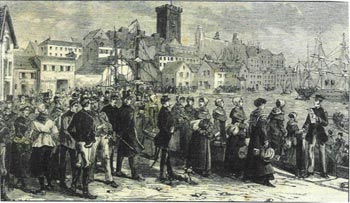
A convict’s life was not easy. Their accommodation was rough and the work was hard and the food was only what had been brought over on the ship until they had established their own food supply.
When the ship landed it would be a day or two before the male prisoners where off loaded. They would be marched up to a compound where they were stripped, washed and inspected and all their vital statistics were recorded including any tattoos or birthmarks.
Detailed reports show that many convicts were adorned with tattoos – up to as many as one in four. Some tattoos were love tokens to partners left behind and others were witty comments on convict life.
If the convicts were skilled, for example stonemasons, carpenters or blacksmiths they may have been retained and worked on the Governments work programmes. Otherwise they were assigned labouring work on farms or given over to property owners who may have once been convicts themselves.
Until 1810 convicts were allowed to wear their own civilian clothes but the new governor wanted to set the convicts apart from the increasing numbers of free settlers that were moving to Australia. A uniform was brought in.
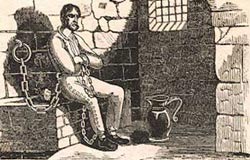
The trousers were marked with the letters “PB” (Prison Barracks). They were buttoned down the sides of the legs so that they could be removed over a pair of leg irons.
Rations
Each convict was given daily rations but they were by no means substantial. Here’s a typical day of grub:
Breakfast – a roll, a bowl of porridge like substance called “skilly” made from oats, water and if they were lucky they would get a few scraps of meat.
Lunch – a large bread roll and a pound of dried, salted meat.
Dinner – One bread roll and if they were lucky they’d get a cup of tea.
Yuck. Not really energy food for all the physical work they were doing. And if a convict was overly fond of drinking spirits the officials had a hangover cure that was supposed to cure the men of ever wanting to drink again. The patient would be forced to drink a quart of warm water containing a wineglass full of spirits and a few grains of tartar emetic. They were then carried to a room and tied to a large drum, which was revolved rapidly which made the patient violently sick before they put him to bed. Yikes!
Housing
For the convicts that stayed in Sydney, accommodation was available in a neighbourhood called The Rocks. It was a free community with few rules. Here husbands and wives could be assigned to live together and some convicts were even allowed to open a business while still under sentence.
The rocks became infamous for prostitution, drunkenness, and thieving so in 1819 Hyde Park Barracks was built which afforded greater security.
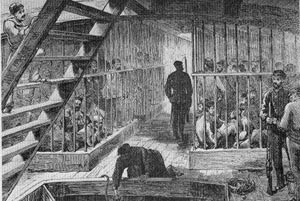
Those sent to work on farms and outlying areas were given food and accommodation by their employer. Those convicts working on the road projects or at the penal colonies had much worse conditions and were often crammed into a hut with 20 others.
Women
Women made up about 15% of the convict population and were notorious for their low-class, foul mouths and loose morals. They would be lined up and told to dress in their London clothes and the officers could take their pick of the prettiest.
Before the women were assigned work they were to work in the Female Factories. The tasks included washing in washtubs, and making clothes. Eventually they’d be sent to other less menial work but if they misbehaved or got pregnant they would end up back there as punishment. Other punishments included having their hair shaved off as a mark of disgrace and having an iron collar fastened around their neck.
Pardons
When most convicts were sentenced back in London they were sentenced to either 7 or 14 years or a life sentence. But a “ticket of leave” was often granted after only a few years had been served. Someone serving a 14 year sentence could get a ticket of leave after only six years. The superintendent would look at the application and decide whether a convict had had enough punishment and decide whether the ticket should be recommended or not.
A ticket of leave would allow a convict to work for themselves and be exempt from public labour. He may still be kept an eye on though. But eventually he might earn himself a conditional pardon, which meant he was free but had to stay in Australia. Others could receive an absolute pardon, which would free them to return to their homeland.
Join us soon for another Life Issues.