

Life Issues – Crimean Soldiers – 1850’s
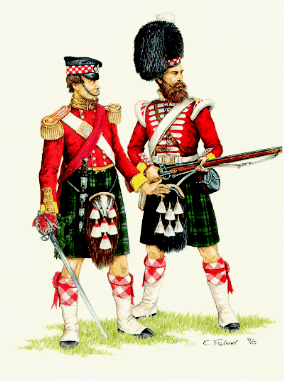
Fighting in a war must be a terrifying experience at any time, but the soldiers who fought the Crimean War had an especially traumatic experience. Official incompetence and disorganisation saw more men fall victim to hunger, cold and disease than actual fighting.
When Britain and France entered the war on the side of the Ottoman Empire in early 1854, they expected a swift victory. Therefore, they only planned for a summer campaign. This meant that the troops were lightly clad, and housed in tents. Aside from the health issues caused by the overcrowded accommodation, the campaign dragged on into the following winter of 1854-55.
The officials were unprepared for this turn of events, and had made no plans to improve the housing of the troops. Tents were woefully inadequate in the harsh winter conditions, and many men perished from the extreme cold. This led Tsar Nicholas I of Russia to comment that his main allies were General January and General February. (Visiting his troops in Crimea in February 1855, Nicholas himself caught pneumonia and died the next month!)
A series of mistakes and misadventures hindered Britain’s attempts to provide relief for its troops. Almost the entire British naval fleet was destroyed by a storm in late 1854, and most of Britain’s supplies went down with it. The British army was unable to build roads from Balaclava to Sebastopol to supply its troops, as it had no engineers in Crimea. In Britain, a public fund was set up to help the troops – most of what it earned was either stolen by officials or lost en route to Crimea.
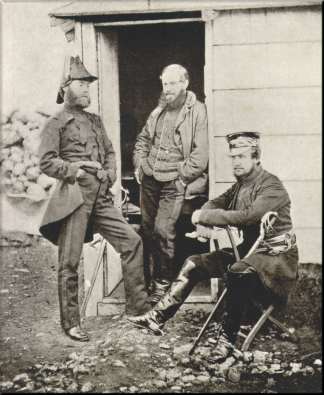
Needless to say, the troops suffered appalling health. However, going to the military hospital was unlikely to provide them any relief. The hospitals were very dirty and infested with vermin, almost no water was available, and most of the food was putrid. Typhus, cholera and dysentry all flourished on the wards, and in retrospect, it is amazing that death rates in the hospital were as low as 40 percent!
Actual fighting in the Crimean War was also terribly disorganised. For example, in the Battle of Alma in 1854, the British charged the Russian positions via the steepest possible route – they were unaware that easier routes existed as they had not conducted any reconnaissance.
The experience of the British army in Crimea, and the public outcry which this aroused, led to widespread reforms of the British army. The supply service was reformed as the Army Commissariat, training and equipment was improved, and flogging was banned as a punishment.
The efforts of Florence Nightingale in the military hospital led to an improvement in hospital standards generally. Recovered from its trauma in Crimea, the British army was now ready to aid the British government in its imperialist ambitions in the latter half of the Nineteenth Century.
Join us soon for another Life Issues.