

Life Issues – Maori Journey
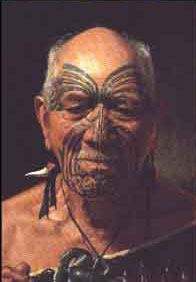
There are many stories that tell how the Maori people came from the now-lost land of Hawaiki to live in Aotearoa (or “land of the long white cloud;” now known to non-Maoris –Pakeha– as New Zealand).
By many accounts, several thousand years ago, a Maori ancestor was journeying at sea and happened by chance to come to Aotearoa. He is the only living Maori known to have made the return journey back to Hawaiki (though all Maoris are said to return to Hawaiki after death).
He came home and told his people about this untouched land. His people thanked him for the information, and took due note of the land, and how to get there. But they stayed in Hawaiki and almost a thousand years passed. Then one day, for reasons now forgotten, the Maori ancestors decided to set out at sea, and they followed the path laid out by their ancestor.
There were many wakas (or ‘boats’) that made the journey, but as each landed on a different part of shore, each waka full of ancestors thought that they were the only group to survive the journey. And they each started their own communities, with their own identity, so that by the time they discovered other iwis (‘tribes’), they each had their own traditions. With so many iwis borne by so many separate journeys to Aoteroa, it is no wonder that so many stories of the journey abound.
How did so many wakas manage to find their way back to a land a single ancestor had found so long ago?
Pre-industrial sea-journeying was much more scientific than we might imagine today. Travelers had an adept knowledge of the skies and used the stars as a guide. However their eyes were not constantly trained skyward., and they looked also to the water, mapping currents and animal migration, so that the glassy plane of the sea did not seem as uniform as it might to the untrained eye.
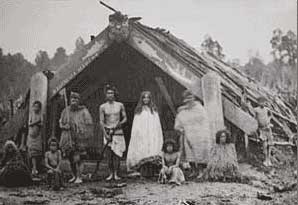
While a few iwis claim that they followed migratory birds, most tribes attribute their journey in large part to the assistance of whales. Pacific whales migrate to New Zealand as their breeding and feeding grounds.
It is conceivable that the Maori ancestors used whales as their guide, knowing full-well that the whales would migrate to shallower waters; it is even possible that the ancient ancestor who first found his way to New Zealand happened upon Aotearoa while chasing whales through the sea. His map back might have been as simple as the statement “follow the whales.”
Most animal migration patterns went unchanged for thousands of years, and are only now changing in response to rapid climactic changes caused by human impact.
It is no wonder that whales are so well-respected in Maori culture if it was whales that led the Maoris to their new land. One could fairly say that, in some manner of speaking, all Maoris came to Aotearoa on the backs of whales.
But there is one ancestor who is believed to have made his way to the new land, not by chasing a whale, but by riding it.
Whale Rider
One of the most beloved stories of Maori travel was written as a novel by Witi Ihimaera. it is a story of Kahutia Te Rangi, the ancestor who did not just come to Aotearoa by following whales, but by riding one. He is believed to have made the long journey from Hawaiki to the east coast of New Zealand, riding on the back of a whale.
While cynics may claim that this is a ridiculous and impossible idea, it should be noted that whales have been seen to migrate along the surface of the water, and they have even been spotted employing a trick similar to the flying V used by migrating birds—2 large whales will swim side by side through rough waters, leaving a smooth wake for young whales and the rest of their herd. Why then is it not possible that one man, after fostering a special relationship with a sea-mammal friend, could not ride that whale in the smooth wake of another whale, just as he might ride in a boat or a raft?
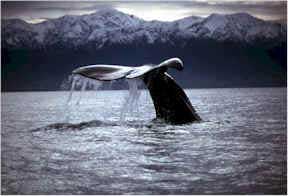
According to Maori myth, whales were the oldest children of the sea gods. It is important to understand the central importance of the ocean in the Maori life. It was not just a source of transportation or something pretty to look at. It was the source of food and life, as well as the connection between Aotearoa and the sacred land from which the Maoris came. Thus, having the whales guide the ancestors to Aotearoa in the first place was a great blessing on the journey. For Kahutia Te Rangi to have been literally carried meant his tribe, must be tapu (‘sacred’) after having been so blessed with a whale as guardian.
Some accounts of Kahutia Te Rangi’s journey do not stop with Kahutia Te Rangi simply riding the whale. According to some understandings, Kahutia Te Rangi was a whale who stepped out of the sea to lead his people in New Zealand. This is a particularly lovely understanding, as it means that people of the iwi, are literally descendents of the gods.
From a modern scientific standpoint, this interpretation seems, at a glance, to be ridiculous. However, didn’t Darwin make just such a claim? According to theories of evolution, humans can trace their lines back past apes and into the sea. Why should we not count these sea-mammals as our ancestors?
Perhaps the persistence of these majestic creatures serves as a reminder of the power from which we came. Whether we attribute our existence to the work of God or gods, design or chance, these ancient giants can show us just how amazing life is.
The Whale Rider has now become a motion picture and was released in 2003. Click here to find out more.
Join us soon for another Life Issues.