

Life Issues – White man’s arrival in America
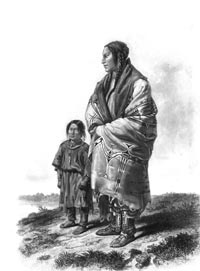
American Indians, or rather the Native Americans, had been living on their land long before white men set foot on the soil. When the Europeans came, there were probably 10 million Indians north of present-day Mexico and they had been living there for an estimated 20,000 – 30,000 years, arriving by land and sea during the ice age.
It is believed that the Indians originated in Asia, though few if any of them came from India. The name “Indian” was first applied to them by Christopher Columbus, who thought that the mainland and islands of America were part of the Indies, in Asia.
When the Europeans started to arrive in the 16th- and 17th-century, they were met enthusiastically by Native Americans. The Natives regarded their white-complexioned visitors as something of a marvel, not only for their outlandish dress and beards and winged ships but even more for their wonderful technology – steel knives and swords, cannons, mirrors, earrings, copper and brass kettles, and so on.
Conflicts eventually arose. The Europeans seemed oblivious to the rhythms and spirit of nature. The Indians detected that nature to the Europeans was something of an obstacle, even an enemy. It was also a commodity: A forest was so many board feet of timber, a beaver colony so many pelts, a herd of buffalo so many robes and tongues. Even the Indians themselves were a resource – souls ripe for the Jesuit, Dominican, or Puritan plucking.
It was the Europeans’ cultural arrogance, together with their materialistic view of the land and its animals and plants, which the Indians found repellent.
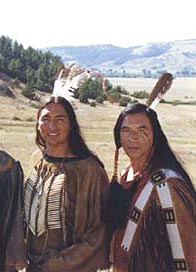
The Europeans brought with them not only a desire and will to conquer the new continent for all its material richness, but they also brought with them diseases that hit the Indians hard. Conflicts developed between the Native Americans and the Invaders, the latter arriving in overwhelming numbers, as many “as the stars in heaven”. The Europeans were accustomed to owning land and laid claim to it while they considered the Indians to be nomads with no interest in claiming land ownership. The conflicts led to the Indian Wars, the Indian Removal Act empowered by president Andrew Jackson in 1830 and other acts instituted by the Europeans in order to accomplish their objectives, as they viewed them at the time. In these wars the Indian tribes were at a great disadvantage because of their modest numbers, nomadic life, lack of advanced weapons, and unwillingness to cooperate, even in their own defence.
The Trail of Tears is a typical story of how the white-man settled these new lands with little or no regard for the original inhabitants. It is a tragic tale of force winning over decency and power winning over justice. While the focus today remains on the route travelled and the journey itself, for eight years prior to the event Cherokee were confronted with their future on a daily basis. Illegal stockades called ‘removal forts’ were built on Cherokee land, for the sole purpose of housing Cherokee people before their forced removal from their land on a journey known as “The Trail of Tears.”
There was little the Cherokee could do in their own defence. They tried fighting through the white mans’ court system, with little success. Even when the Court ruled that Georgia could not extend its laws on a sovereign nation such as the Cherokee, removals still continued.
Settlers were greatly divided on the issue of removal. Families that had lived in the Nation before the Georgia Gold Rush tended to be more supportive of the Cherokee. One reason for the strong bond was the acceptance of them by the tribe. White settlers were easily accepted into Cherokee society. The reverse was not true. In general, Georgians viewed the Cherokee as not much higher on the social level than slaves. Another reason that settlers were greatly divided was the support Cherokee had given struggling early settlers in their time of need.
Some settlers would taunt the Cherokee, telling them the forts were to be their new home. With great concern, Principal Chief John Ross and Whitepath, among others, journeyed to Washington to meet with Jackson. Jackson hypocritically told them “You shall remain in your ancient land as long as grass grows and water runs.” In early 1835, work began on road improvements to move the Cherokee to the starting point for their removal.
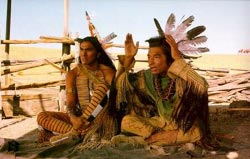
The first Cherokee round-up started in May 1838. Some Cherokee reported to the forts, not knowing the fate that awaited them, simply because John Ross had told them this is what they should do. Others stayed and were working in the fields when the soldiers came. The Georgia Guard had identified Cherokee homes. Aided by troops from Alabama, Florida, North and South Carolina, and Tennessee, Georgia militia would typically approach a home and enter the house. The resident(s) would then be forced to leave. The amount of time given residents to collect belongings varied greatly. Some were forced to leave immediately while others had enough time to sell valuables to local settlers at bargain rates. There are numerous instances where settlers attempted to intervene when the Guard was being particularly rough on a family.
Conditions at the forts were horrible. Food intended for the tribe was sold to locals. What little the Cherokee had brought with them was stolen and sold. Living areas were filled with excrement. Birth rates among the Cherokee dropped to near zero during the months of captivity. Cherokee women and children were abused.
For a number of reasons nothing seemed to go right during the removal. The round up that began in mid-May was completed on June 2, 1838. Some Cherokee were forced to live in these conditions for up to five months before the start on the journey whose name is “Nunna daul Tsuny (Trail Where They Cried)” where they were relocated to unproductive wasteland. 4,000 Cherokee deaths are attributed to the removal, with one third considered a direct result of the conditions in the prisons. Unfortunately, many of the Cherokee Removal Forts are unmarked and lost to time.
This is a typical, tragic story of invaders abusing the land and the native people all in the name of expansion, growth and progress.
Join us soon for another Life Issues.