

Life Issues – Superb Singapore
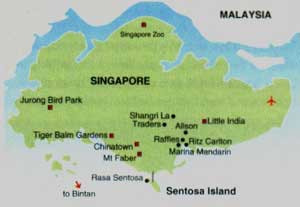
The Country
Situated just off the tip of Malaysia, Singapore is a small country measuring 23kms long by 42kms wide. It also has 60 tiny islands that belong to it and a 1.1km embankment of land known as the Causeway links it to Malaysia.
It is a generally flat country with a few coastal cliffs and Bukit Timah at a height of 15m is the hill that stands at the centre of the main island.
Singapore enjoys a tropical climate with the average temperature being 27 C. There is a lot of rain in this country with the North East Monsoon striking in December – March and the South West Monsoon hitting in June – September. Even when there is no monsoon there can be thunderstorms, which break up the humidity slightly.
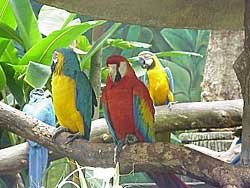
The main island of Singapore was once a tropical jungle with mangrove swamps lining the coast. Tigers used to live in the jungle and there are also many lizards, frogs and bats as well as snakes, lemurs and squirrels. Singapore is proud of its birdlife and there are as many as 320 different species of birds that have been recorded in the country. Many of these are migratory birds that fly on over from the Northern Hemisphere in the winter.
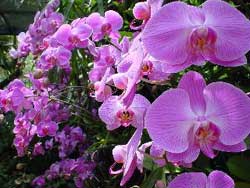
Orchids are a beautiful sight in the country and they are one of the main exports with the flowers making their way all around the world.
The Lion Sleeps Tonight
Named by a prince visiting the area from Sumatra, Singapore is named after an optical illusion experienced by the prince. He thought he saw a lion standing in a rain forest in the island at the tip of Malaysia. Of course a lion would never venture into such vegetation, preferring to stay in the open plains and no lions have ever been sighted in Singapore. But the country was called ‘Singa Pura’ or ‘Lion City’ and the symbol of the country became the merlion, a mythical creature with a lion’s head and a fish’s tail.
In fact a huge merlion statue with glowing eyes that emit laser beams at night can be seen on Sentosa Island. Quite spooky at night but very impressive nonetheless and a great reminder of what the prince thought he saw many years ago.
Sentosa Island is a theme park now but was once a burial place for the victims of local pirates and used to be called ‘Blakang Mat’ or ‘Back of the Dead’!
A great place to live
Singapore now has one of the highest living standards in Asia and is actually one of the top 20 of the wealthiest countries in the world. How such a small country with very little countryside to grow plants or produce meat has become so wealthy is a huge achievement. There is not even enough water to keep the population quenched! There is a pipeline that runs from Malaysia to Singapore to keep water flowing!
The port on Singapore is where the real money is. It is one of the biggest ports in the world and is certainly one of the busiest too. With freighters being loaded and unloaded day and night the port is never quiet. The port facilities are among the most modern in the world and the container port is all electronically controlled.
Cruise ships use the specially built cruise terminal and tankers from Indonesia, Malaysia, the Middle East and Brunei supply oil to the refinery.
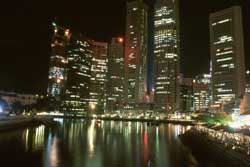
The airport at Singapore is another world famous landmark. Changi Airport is modern, exquisitely designed and very busy. New records are broken every year as Singapore Airlines brings more and more visitors to the country.
Communications and electronics abound in Singapore with foreign investors being brought in with incentives. Many banks trade in Singapore and the financial market is of extreme importance to the country’s economy.
Singapore is also well known for its fine silks and garments that can be made to measure in a matter of hours. Intricate and ornate jewelry, silk robes, scarves, ties and jewelry are found in Singapore and bought up by the bagful by tourists!
The old way of life is dying out somewhat with young Singaporeans wanting to lead the high life and so do not want to take over cottage businesses from their parents. Skills such as basket making, mask making and the businesses of other skilled craftsmen are slowly dying out as the next generation turns its back on chipping away in small workshops and looks instead at going into the collar work of offices and finance.
Life is so good however in Singapore that unemployment is at around the 2.7% mark. Most Singaporeans own their own home with the compulsory saving towards home ownership implemented by the state. Workers have part of his or her wage set aside automatically to go into their home saving fund.
A hundred steps to carry the groceries up
As there is a large population in a small land mass area most homes are apartments in a multi story block. Living space is in short supply and people live at home with their parents until they marry or turn 35 years of age at which time they can buy their own apartment through the Housing Development Board.
Actual houses are hard to come by in Singapore, as there is simply not enough room in the country for many of them. Statistics show that a new 3 bedroom Housing Development Board flat in the suburbs costs between S$200,000 – $250,000 with a 99 year lease!
You can generally tell what race of owner lives in the flat or home of a Singaporean. The Malay people tend to hang their prayer mats over the apartment railings to air off. The Chinese very often hang a red pelmet over the door to their property as a symbol of good luck. And the Indians often place a few lemon leaves behind the doorframe.
Racial harmony
Singapore is made up of many races but the predominant one is Chinese at 78%. There are 14% of Malays, 7% of Indians and 1% of other ethnic groups such as Europeans known as Eurasians.
The population of nearly 4 million is a good example to other Asian countries with the slogan “Many races, one nation, one Singapore” as the mix of races live in harmony together with everyone respecting each others way of life and religious freedom allowing people to practice what they like.
The natives of the island are the Malay as many hundreds of years ago they traveled back and forth to the island from the mainland of Malaysia. Records show that there has been a small settlement on the island since around 1330. In 1819 a European by the name of Stamford Raffles visited the island on business with the East India Company. He was on the look out for new trading countries and when he landed at Singapore found a small village inhabited by about 150 Malay.
Trading was set up and immigrants flocked to the new settlement situated by the mouth of a river. Malays and migrants from the Malacca region were among the first to arrive followed by other Indonesians.
The first Chinese arrived in 1821 on a small junk. They (and the Chinese that arrived after the first group) wished to maintain their own cultural identity. They continued to prepare food according to ancient customs, followed their professions and their religion.
Because it was the menfolk who traveled out of their country to start with many Chinese men married Malay women. The children of these couples were called Peranakans or Straits Chinese as their Malay mothers originated from the Straits. These Peranakans were the first Asians to speak English and they also adopted Western customs. They were English occupied colony and as such were known as the “Kings Chinese”.
Mr. Singapore
Singaporeans live in harmony and safety probably due to the strict laws put in place by the government following the independence of Singapore in 1959. Lee Kuan Yew was Prime Minister for 31 years and he led the way of the new generation post independence. Nicknamed a ‘banana’ he was said to be yellow on the outside but white on the inside. However he was well respected in his country and was often referred to as ‘Mr. Singapore’.
Laws were set in place by both ‘Mr. Singapore’ Lee Kuan Yew and his successor Goh Chok Tong to ensure that Singaporeans worked together for the common goal of making Singapore a wonderful place to live with a strong economic future.
Rules and regulations
The laws are famous and most souvenir shops in the country sell T-shirts with warnings of the implications of not flushing the toilet. Laws banning chewing gum, teenage smoking and fines being handed out for not flushing the toilet, jay walking, not washing hands after using the toilet, spitting, swearing and littering make for great T-shirts and slightly nervous tourists. But the truth is that Singapore is a beautiful country with an extremely low crime rate and friendly and respectful citizens. There are no slums, no epidemics and very little poverty.
Visit and enjoy
Tourists flock to Singapore to buy silk garments on the famous Orchard Road, visit famous landmarks such as the Raffles Hotel and to have a Singapore Sling drink, famous the world over and invented at Raffles.
The country named after an optical illusion is an oasis of beauty and tranquility is seeped in history and is most definitely a wonderful place to visit – just leave your chewing gum at home!
Join us soon for another Life Issues.