

Life Issues – Victorian Children
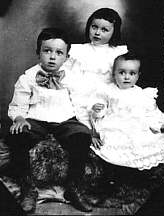
Life can be tough at the best of times but life for children in the Victorian era was really hard.
Some were born into wealthy families and some lived in the countryside and had a good upbringing away from the industrial areas of the bigger cities like London and Leeds.
But many other children were born into poor families who lived and worked in the cities…
London
London in the late 1800’s was a busy, overpopulated city due to the recent industrial revolution.
People crowded to the city in the search for work in the new factories but all they found was overcrowded areas and not many jobs.
Coal stoves and poor sanitation resulted in the air becoming foul smelling and excrement and rubbish was dumped directly into the River Thames.
The Great Potato Famine of 1848 in Ireland resulted in over 100,000 Irish coming over the sea to England and many settled in London. This added to the already over-crowded streets and unemployment.
All members of the family had to work just to survive. Children as young as five were sent out to sweep chimneys and beg for money or food and many young children died in such conditions.
As a result of bad housing and unsanitary conditions there was an outbreak of the disease cholera and this put a major dent into the population of the East End of London. Thousands of people lost their lives and many children were left destitute as a result.
Thousands of children had to sleep on the streets and beg for their food or scour the rubbish bins like rats. Many other children had been maimed in factories and, left disabled and unwanted, joined them.
Imagine being on your own, scared and hungry and fighting for a space to sleep in the dirty, noisy streets of a big city. Always cold, always tired. Not knowing who to talk to, who to trust. No toys, no clean clothes, no Mum or Dad to tuck you into a warm bed at night, to kiss you and tell you that you are loved and safe. Not being able to read or write or go to school. Having nobody to hug you or talk to or ask for advice.
There was no future for these street children and many had to go into prostitution or criminal activities.
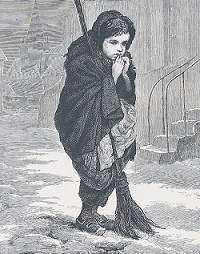
What were you doing when you were five or six years old?
Think of what you were doing when you were younger. Did you go to kindergarten and have your friends round for tea. Did you play with your dollshouse or cars and make mud pies in the garden? Did you sit and watch the television and sing along to your favourite nursery rhymes?
Now think of the size of a chimney. And think how terrifying it would have been to be sent climbing up one.
The air thick and black. Your lungs struggling to catch their breath as the oxygen lessened due to the residue of the coal. Squashing yourself into a tight gap and sweeping away the ashes and trying to hide your mouth and eyes from the falling soot. All the while trying to stop yourself from falling back down the chimney.
And when you finally finished getting all the soot you possibly could from the cracked walls of the chimney and made your way back down to breath in the fresh air you were beaten by your master for taking too long or making a mess.
Chimney sweeping was just one of the jobs that young Victorian children had to do and was probably one of the least dangerous jobs in comparison to handling the heavy machinery in the factories.
Saviours
Luckily for some of these children, along came a wonderful man, Thomas Barnardo. Have a look at the feature article to find out more about him and the amazing work he did in his lifetime and the legacy he left behind him.
There were many other campaigners for the rights of the child and Charles Dickens was one of them. Through his stories – most notably Oliver Twist – Dickens brought the plight of these children to the attention of the well-heeled literate aristocrats and business people of the country and reforms were made. In 1870 a law was passed to make education for children between the ages of five and twelve compulsory.
Children were no longer required to do such work as chimney sweeping and were free at last to enjoy some of what childhood had to offer as well as a chance to have a future through their education.
Join us soon for another Life Issues.